
Why Is Chinese Football So Bad? A Deep Dive into Systemic Failures
On a sweltering July evening in 2023, I watched a Chinese Super League match in Shanghai. The stadium was half-empty。the play was sluggish, and a local fan next to me sighed, "We spend billions, but we can't even pass the ball properly." That moment crystallized the question: Why is Chinese football so bad?
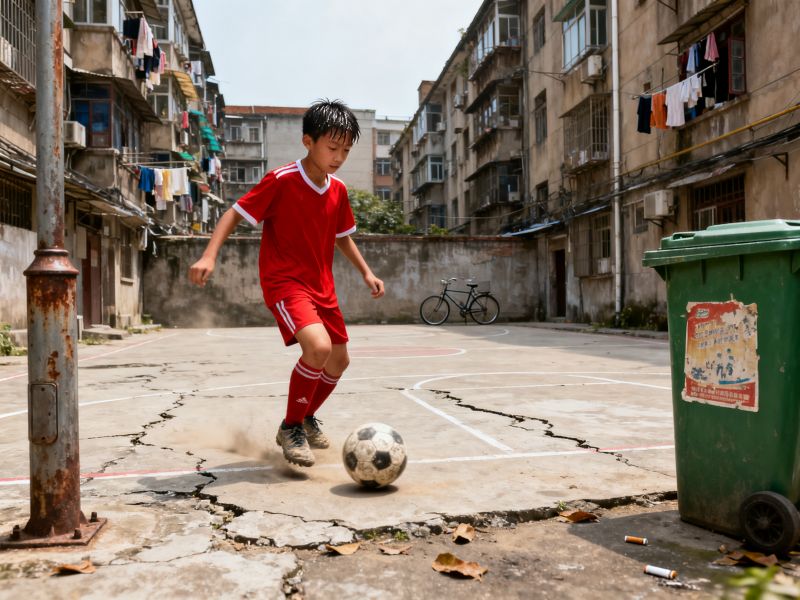
The answer isn't simple, but it starts with the foundation—youth development.China has a vast population, yet registered youth football players number fewer than 100,000。compared to millions in Germany or Brazil. Most kids don't play organized football;they study. The education system prioritizes academic scores over sports, and parents see football as a distraction. Even when children show talent, they lack access to quality coaching and facilities. I visited a primary school in Chengdu where a single concrete court served 2,000 students. No grass, no goals—just a makeshift pitch. Without a grassroots pipeline, the national team will always struggle. This isn't speculation;it's arithmetic.Money poured into the professional league。
but it created a distorted ecosystem. In the 2010s, clubs splashed cash on aging foreign stars like Oscar and Hulk, while domestic players' salaries soared without corresponding skill improvement. A former CSL coach told me, "Players earn millions but can't handle pressure because they never learned to compete at a high level." Corruption and poor governance exacerbated the problem. The Chinese Football Association has been plagued by scandals, from match-fixing to bureaucratic mismanagement. When the CFA imposed a 100% salary cap on foreign players in 2020, many clubs collapsed financially, leaving unpaid wages and disbanded teams. The league became a house of cards.Cultural factors are equally potent. Football requires spontaneous creativity and risk-taking—traits often suppressed in China's rigid, test-driven education. Kids are taught to follow instructions, not to improvise on the pitch. I recall a youth tournament in Beijing where a coach yelled at a 12-year-old for attempting a dribble instead of passing. "Don't be selfish!
" he screamed. That mentality stifles flair. Contrast this with street football in Argentina or playgrounds in England, where kids learn by trial and error. China's football culture is top-down。not bottom-up. Without a shift in mindset, why is Chinese football so bad will remain a perennial question.Reform efforts exist—new academies, foreign partnerships。and a push for campus football—but they are fragmented and slow. A friend who coaches at a private academy in Guangzhou lamented, "We have good plans, but implementation is chaotic. Coaches lack licenses, and tournaments are poorly organized." The national team's recent Asian Cup performances—scoreless draws and early exits—reflect these deep flaws. Fixing Chinese football requires patience, not quick fixes. Until the system values grassroots participation, good governance, and creative freedom, the question will persist. And that's the uncomfortable truth.
Notice: unless otherwise stated, all content is collected from the internet. If it infringes your rights, please contact us for removal.